


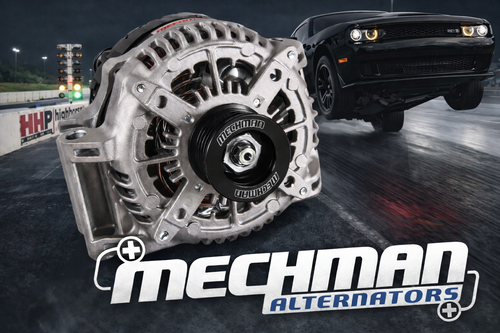


Mechman High-Amp Alternator (240A / 320A / 370A)
Adding electrical load (fuel system, fans, pumps, intercoolers, audio, lighting) or fighting voltage drop at idle? Mechman’s high-output alternators are built to keep your Mopar charging consistently under real-world demand. Choose the amperage and pulley option that fits your setup.
Quick Highlights
- Choose Your Output: 240A / 320A / 370A options available (select above)
- More Charging Headroom: Helps maintain stable voltage with added accessories and upgrades
- Performance-Built Internals: Designed for repeated high-load cycles
- Multiple Pulley Options: Dial in charging behavior for your RPM range
- Plug-In Fitment: Built for late-model HEMI applications (verify connector/fitment below)
Which Alternator Should I Choose?
240A (OEM+ Upgrade): Stock to mildly modified vehicles needing to replace a failed factory alternator or requiring slightly stronger charging than factory, especially at idle with added accessories.
320A (Balanced Performance): Our top seller! Ideal for high performance and most race builds with upgraded fuel system(s), fans, water pumps, nitrous oxide systems and aftermarket ECU's such as the Holley Gateway Conversion along with common bolt-ons where you want strong output without going max-everything.
370A (Maximum Electrical Demand): For high-demand setups: heavy accessory load, extreme audio, or builds that cannot tolerate voltage drop under load. This alternator is designed to work best in lower rpm applications and is not intended for high rpm use.
Output Specs (Idle vs Cruising)
| Variant | Part # | Amps @ Idle | Amps @ Cruising | Notes |
|---|---|---|---|---|
| 240A | 11576240 | 200+ A | 240+ A | Published as HOT RATED cruising output. |
| 320A | 11576320 | 180+ A | 320+ A | Published as HOT RATED cruising output. |
| 370A | 11576370 | 180+ A | 370+ A | Best suited to lower-RPM/high-demand use. |
Note: Output varies with pulley ratio, engine speed, electrical load, and temperature. “HOT RATED” indicates measured performance under elevated temperature conditions per Mechman.
Why Mechman?
- Stable Charging Under Load: Helps prevent voltage sag that can affect drivability
- Better Confidence at Idle: Supports charging in staging lanes, traffic, and heat
- Upgrade-Friendly: Pairs well with pumps, fans, audio, lighting, and electronics
Vehicle Fitment
- 2011–2015 Chrysler 300C 5.7L
- 2012–2014 & 2023 Chrysler 300C 6.4L
- 2011–2024 Dodge Durango 5.7L
- 2018–2024 Dodge Durango SRT 6.4L
- 2021, 2023–2024 Durango SRT Hellcat 6.2L
- 2011–2023 Dodge Charger 5.7L
- 2012–2023 Dodge Charger 6.4L
- 2015–2023 Dodge Charger Hellcat/Redeye 6.2L
- 2011–2015 Dodge Challenger 5.7L
- 2011–2023 Dodge Challenger 6.4L
- 2015–2023 Dodge Challenger Hellcat/Redeye 6.2L
- 2011–2021 Jeep Grand Cherokee 5.7L
- 2012–2021 Jeep Grand Cherokee 6.4L
- 2018–2021 Jeep Grand Cherokee Trackhawk 6.2L
*Year applications are listed as a general guideline for fitment. Please check your connector before ordering to ensure it matches the connector pictured above!
Important: Exact fitment can vary by year/trim/engine/configuration. Contact HHP with your year/make/model/trim and engine if unsure.
Pulley & Belt Notes
- Smaller pulley: Higher alternator speed at idle (helpful for idle charging)
- Larger pulley: Can help with high-RPM durability
- Belt fitment: Some pulley choices may need belt changes
Installation Notes
- Professional installation recommended if you’re unfamiliar with charging systems
- Verify battery condition, grounds, and charge wiring for best results
- Upgraded charge wiring (“Big 3”) recommended on high-load builds
FAQ
Will I need a new belt?
Usually not for stock-style pulley setups, but pulley changes can sometimes require a different belt length. Confirm belt fitment as needed.
Which option is best for a street car?
Most performance street builds do well with the 320A option. If your build has extreme electrical demand, consider 370A.
What causes voltage drop even with a new alternator?
Weak battery, poor grounds, undersized wiring, corroded connections, or extremely high load. Check battery health and wiring before assuming alternator issues.


